


Trademark lawyers in Dubai can assist when a brand owner needs more than a simple filing service. Legal support becomes particularly useful when a proposed mark may conflict with an existing registration, an objection has been filed, a competitor is using a confusingly similar brand, or the trademark must be licensed, transferred, enforced, or defended.
For businesses, founders, investors, and international brand owners operating in Dubai, the key question is not simply whether to register a trademark. It is identifying the legal stage of the issue and choosing a lawyer with experience that matches it. Advocator is a legal platform that helps users identify the appropriate specialization and reach a lawyer suited to the nature and stage of their trademark matter.
Table of Contents
When Should You Contact Trademark Lawyers in Dubai?
You should consider contacting a trademark lawyer when your issue involves a legal risk, dispute, objection, ownership question, licensing arrangement, or enforcement problem rather than a straightforward administrative filing.
- Before filing: where a similar mark may already exist or the proposed brand could face registration issues.
- During examination: when the trademark application receives an objection or requires a legal response.
- During opposition: when another rights holder challenges the registration or you need to oppose another application.
- After registration: where your mark is copied, imitated, licensed, transferred, or used without permission.
- During a dispute: when negotiations, administrative action, or court proceedings may become necessary.
Trademark work falls within the wider field of intellectual property and commercial legal practice in Dubai, but the right legal support depends on whether your immediate problem concerns registration, ownership, opposition, licensing, infringement, or enforcement.
Not Sure What Type of Trademark Help You Need?
Advocator can help you identify whether your issue requires registration, opposition, enforcement, or another trademark specialization before you speak with a suitable lawyer.
What Does a Trademark Lawyer in Dubai Actually Do?
A trademark lawyer assesses the legal position behind the brand rather than only completing an application form. The lawyer may review ownership, conflicting marks, evidence of use, contractual rights, objections, infringement risks, and the legal remedy the client is trying to achieve.
Typical work may include clearance and conflict analysis before filing, responding to objections, handling oppositions, advising on trademark ownership, drafting licence or assignment agreements, preparing enforcement notices, assessing infringement evidence, and representing the rights holder or respondent when a dispute escalates.
How Does Trademark Registration Work in the UAE?
Trademark registration in Dubai is administered at federal level through the UAE Ministry of Economy. The governing legislation is Federal Decree-Law No. 36 of 2021 Concerning Trademarks together with its Executive Regulations.
According to the Ministry of Economy’s current trademark service, the basic process includes submitting the application and supporting documents, examination by the competent department, payment of publication fees after acceptance, publication in the official Trademark Bulletin, a 30-day opposition period, and payment of the final registration fee once the opposition period has ended.
The Ministry currently lists AED 750 as the application fee, AED 750 as the publication fee, and AED 5,000 as the final registration fee. Fees and procedures can change, so they should be checked against the Ministry’s live service before filing.
For applicants located outside the UAE, the Ministry states that the application must be submitted through a registered trademark agent and accompanied by the required legalized power of attorney. This makes it especially important to distinguish between administrative filing support and legal advice about ownership, objections, infringement, or disputes.
What Should a Lawyer Review Before a Trademark Application Is Filed?
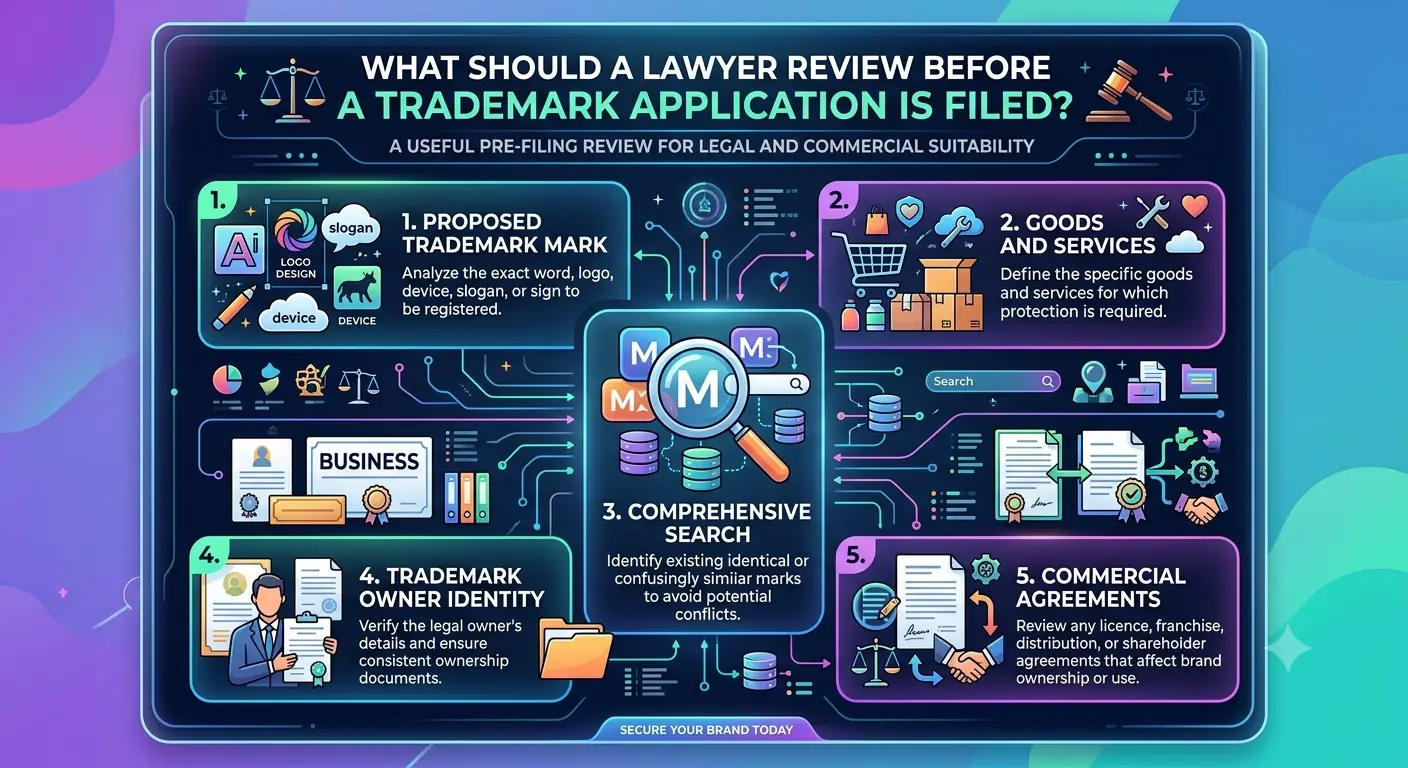
A useful pre-filing review should determine whether the proposed mark is legally and commercially suitable for protection before significant resources are committed to the application.
- The exact word, logo, device, slogan, or other sign proposed for registration.
- The goods and services for which protection is required.
- Existing identical or confusingly similar marks that could create a conflict.
- The identity of the actual trademark owner and whether ownership documents are consistent.
- Any licence, franchise, distribution, shareholder, or commercial agreement that affects brand ownership or use.
This review is different from simply searching whether an identical business name appears online. Trademark conflicts can depend on similarity, protected goods or services, ownership rights, and the overall circumstances of the proposed registration.
What Happens If Someone Opposes Your Trademark Application?
An opposition means another party is formally challenging the acceptance of the trademark. The issue should be reviewed quickly because an opposition involves legal arguments about the competing marks, the rights claimed by each party, and the evidence supporting those rights.
A trademark lawyer may assess the opponent’s registration or claimed rights, compare the marks and relevant goods or services, review the client’s earlier use and supporting documents, and determine the appropriate response. The Ministry of Economy provides specific services for objections, responses to objections, and hearings concerning trademark applications.
Facing a Trademark Objection or Possible Infringement?
Advocator can help you reach a lawyer whose experience matches the stage of your trademark issue, whether it concerns an objection, competing mark, unauthorized use, or enforcement.
What Can You Do If Your Trademark Is Being Used Without Permission?
The appropriate response to suspected infringement depends on the registered rights, the way the other party is using the mark, the available evidence, the goods or services involved, and whether the problem is occurring offline, online, or across multiple channels.
Before taking formal action, preserve evidence showing how the mark is being used. This may include product photographs, online listings, invoices, advertisements, social media pages, domain information, correspondence, and evidence connecting the use to the responsible party.
A lawyer can then assess whether a legal notice, administrative complaint, negotiated resolution, or court action is appropriate. Where the misuse also involves impersonation, fraudulent accounts, hacking, or another digital offence, the issue may overlap with the work of a cybercrime lawyer in Dubai, although trademark infringement and cybercrime remain distinct legal issues.
What Documents Should You Prepare for a Trademark Lawyer?
The documents depend on the stage of the matter, but an organized initial file allows the lawyer to identify the legal issue faster.
- The trademark certificate or pending application details, if available.
- The logo, word mark, packaging, or other material showing the brand in use.
- Commercial licence and documents showing who owns or uses the mark.
- Any objection, official decision, warning letter, licence agreement, or assignment document.
- Evidence of suspected infringement, including screenshots, invoices, photographs, listings, and relevant correspondence.
If the matter involves an international owner, also prepare the corporate documents and any power of attorney or international registration information relevant to the UAE designation.
Do You Need a Trademark Lawyer or a Trademark Agent?
The answer depends on the work required. A registered trademark agent can be important for formal filing and Ministry procedures, particularly where the applicant is outside the UAE. A lawyer becomes especially valuable when the issue requires legal analysis, contractual advice, opposition strategy, enforcement, dispute resolution, or litigation.
In some matters, the two roles work together. The important point is to identify whether your need is primarily administrative registration or a legal problem involving rights, liability, ownership, or a dispute.
Can a Dubai Trademark Be Protected Internationally?
Yes. The UAE is a member of the Madrid System for the international registration of trademarks. The system can allow eligible UAE trademark owners to seek protection in multiple participating jurisdictions through an international application structure rather than filing completely separate applications in every country.
International protection still requires careful planning because protection depends on the countries designated, the underlying trademark rights, classification strategy, and examination by the relevant jurisdictions. A lawyer or qualified trademark professional can help determine whether a national UAE filing, Madrid application, or combination of filings better fits the brand’s commercial plans.
How Should You Choose a Trademark Lawyer in Dubai?
Choose a lawyer according to the trademark problem you actually have. Someone focused mainly on filing may not be the right choice for an infringement dispute, while a litigator may not be necessary for a straightforward registration.
- Ask whether the lawyer regularly handles trademark matters at your current stage.
- Confirm whether the work involves registration, opposition, enforcement, licensing, or litigation.
- Ask what documents are needed before legal advice can be given.
- Clarify whether trademark-agent services are included or handled separately.
- Request a clear scope of work and fee structure before proceeding.
A responsible legal professional should explain the available options and risks after reviewing the relevant documents rather than guaranteeing registration or a particular dispute outcome.
Frequently Asked Questions About Trademark Lawyers in Dubai
Can I register a trademark in Dubai without a lawyer?
A UAE-based applicant may be able to submit a trademark application without hiring a lawyer, depending on the circumstances. However, legal advice can be useful where the mark may conflict with an existing registration, ownership is unclear, an objection is expected, or the brand has significant commercial value. Foreign owners should also check the Ministry’s current registered-agent requirements.
Who registers trademarks in Dubai?
Trademark registration is handled federally by the UAE Ministry of Economy rather than by a separate Dubai trademark registry. A business operating in Dubai therefore applies through the federal trademark system, although local commercial and enforcement issues may still arise in Dubai.
How long does trademark registration take in the UAE?
There is no single guaranteed completion date because timing can be affected by examination, publication, objections, payment, and any issues in the application. The Ministry of Economy currently states an average period of 45 working days to study and issue a decision on an application, followed by the publication and opposition stages.
How long is the trademark opposition period in the UAE?
The Ministry of Economy currently states that the opposition period is 30 days from the date the accepted trademark is published in the Trademark Bulletin. If an opposition is filed, the matter moves into a separate procedure that may require evidence and legal submissions from the parties.
Can a foreign company register a trademark in the UAE?
Yes. Foreign trademark owners can seek protection in the UAE. The Ministry’s current requirements state that an owner located outside the country must file through a registered trademark agent and provide the required legalized power of attorney. International protection may also be available through the Madrid System where applicable.
Can a trademark lawyer stop another business from using my brand?
A lawyer can assess whether the other party’s use infringes legally enforceable trademark rights and what response is appropriate. The available step may range from a legal notice or negotiated settlement to an administrative complaint or court proceedings. Registration, similarity, evidence, the relevant goods or services, and the nature of the unauthorized use all matter.
What is the difference between trademark registration and trademark enforcement?
Registration establishes and records trademark protection through the official registration system. Enforcement concerns what happens after another party allegedly uses the protected mark without authorization. The first is primarily a protection and registration process; the second involves evidence, legal rights, remedies, and potentially a dispute.
Choosing the Right Legal Route for a Trademark Matter
A trademark issue should be handled according to its actual stage. A new brand may need clearance and registration support, an accepted application may face opposition, and a registered mark may later require licensing, transfer, renewal, or enforcement. Treating all of these as the same service can lead to unnecessary steps or the wrong professional being selected.
Advocator helps users identify the relevant trademark specialization and reach a lawyer whose experience is appropriate for the issue, while the lawyer remains responsible for assessing the documents, applicable law, and legal strategy for the individual case.
Ready to Discuss Your Trademark Matter?
Share the stage of your trademark matter with Advocator to reach a lawyer whose experience matches your registration, opposition, licensing, or enforcement needs.